

 Published on 2/25/2026
  Reading time: 5 min
 PQS is a digital solution developed to structure, standardize, and track the control of production defects in an industrial environment.
The project was implemented to replace decentralized spreadsheets with an integrated, auditable, and data-driven system, strengthening governance and decision-making in the Quality area.
The challenge
Decentralized records in spreadsheets and lack of structured criticality classification, compromising traceability and prioritization.

Problems
-
 Lack of standardization in recording defects
 - Decentralized spreadsheets between areas and shifts
- Absence of clear criteria for criticality
- Low traceability of occurrences

Needs
-
 Standardization of defect records
 - Single structured database
- Automatic classification of criticality
- Visual evidence and auditable history
The solution
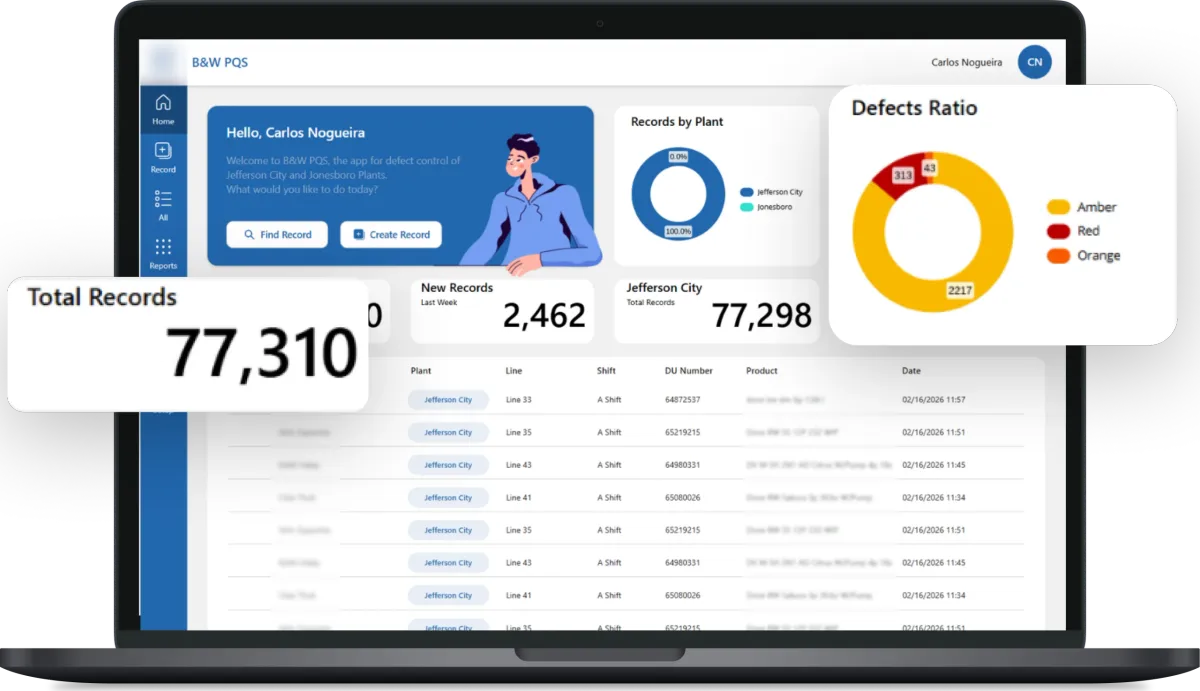
A complete application was developed in Power Apps, with a structured SQL database and documentary support in SharePoint, ensuring centralized control, traceability, and governance of defect records.
Key highlights include:
-
 Standardized Defect Register: the operator accesses the application and fills in mandatory data, ensuring information consistency;
 - Structured Classification of Defects: defect types have predefined categories, avoiding free-form descriptions and eliminating ambiguities;
- Automatic Criticality Definition: based on the selected defect, the system automatically classifies the occurrence as Red, Amber, or Orange, directing appropriate interventions for each level;
- Attachments and Visual Evidence: the user can attach photos directly to the defect record, allowing for more precise technical analysis and visual traceability;
- Technical Comments Field: the possibility to add additional observations to enrich the history of the occurrence;
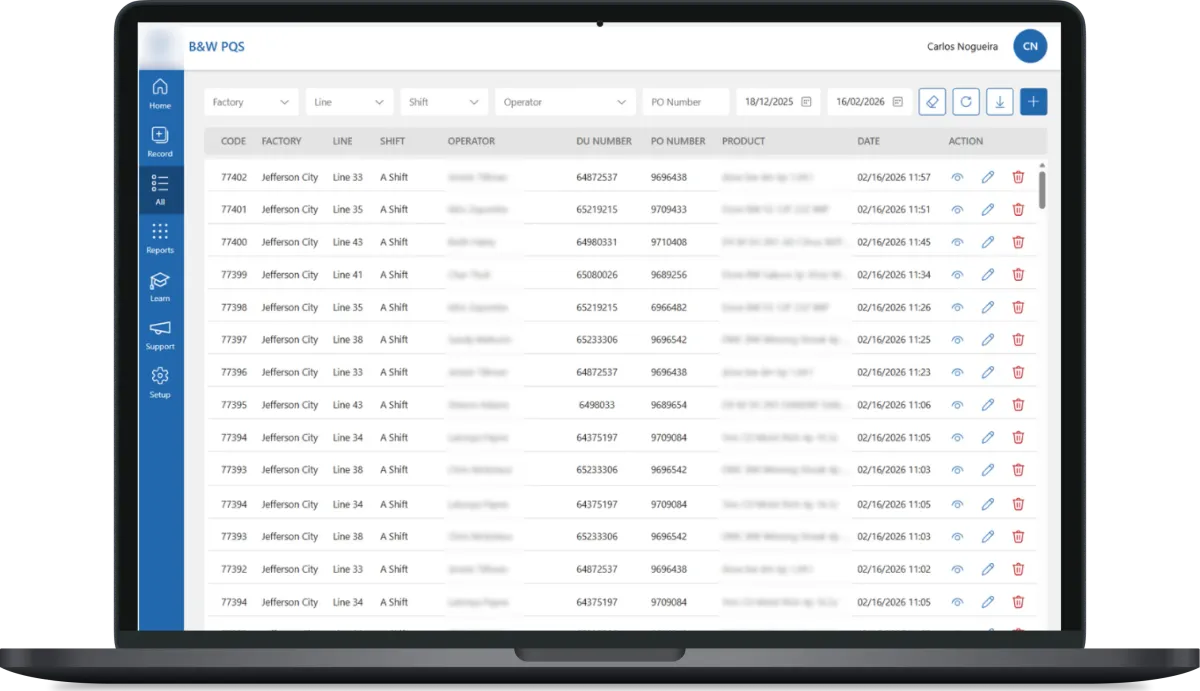
- Full Traceability: all records are stored in a centralized and auditable manner, allowing tracking by line, shift, product, and criticality;
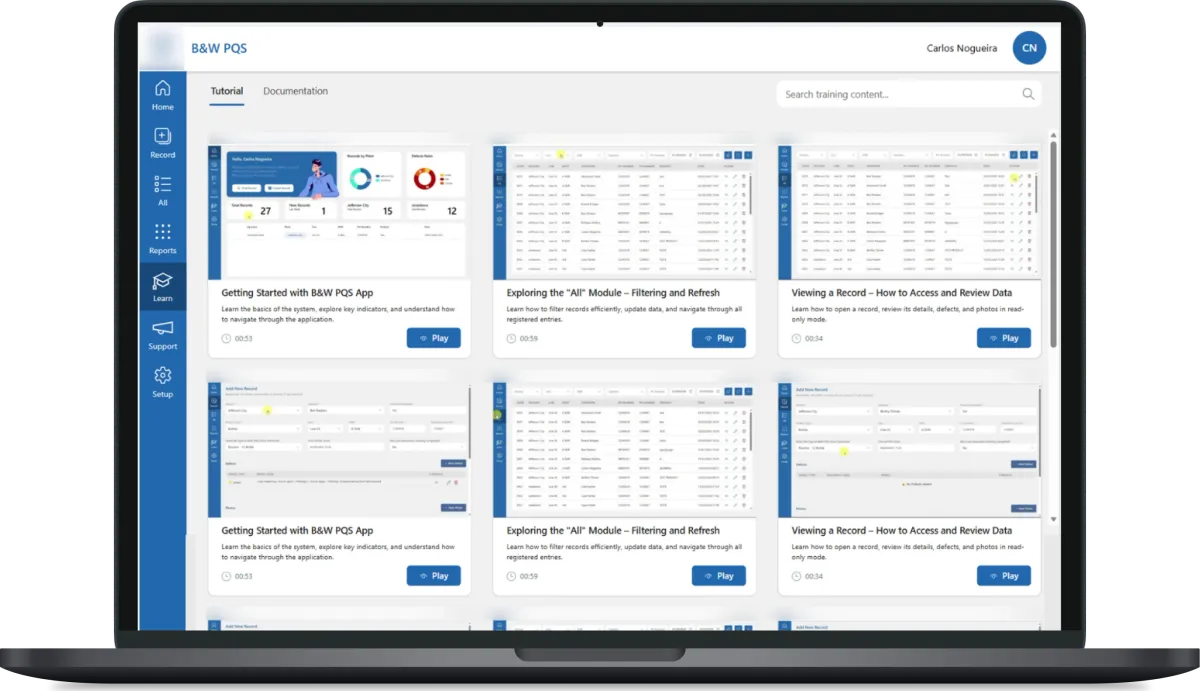
- Integrated Learn Module: the app features an internal educational module that teaches users how to properly utilize each system feature, promoting autonomy and standardization.
Results
The implementation of PQS was not limited to digitizing the process. The project structured a new operational base for industrial quality control, strengthening governance and information reliability.
Impacts were noted both in operation and strategic management:

Elimination of decentralized spreadsheets

Reduction in rework

Complete standardization of records

Agility in interventions with automatic criticality

Greater traceability and auditability

Organized visual evidence

Improvement in data quality for decision-making

High operator engagement

Structured database ready for strategic and future analysis
Strategic Differential
The differential of PQS lies not only in digitizing the recording of defects, but in the integrated architecture among operation, data, and governance.
The solution combines:
-
 Structured SQL database;
 - Integration with SharePoint;
- Intuitive interface for operators;
- Automatic classification of criticality;
- Full traceability;
- Integrated educational module.

More than a registration app, it is a structural platform for industrial quality governance, data-driven and ready to evolve into strategic indicators.